Santorini Cruise Strike Explained: The Real Issue Is Access, Not Cruise Ships
What Happened in Santorini on June 22, 2026
Over the past few days, many cruise guests have been reading confusing news about Santorini: local bus disruptions, cruise calls being cancelled or postponed, new passenger-flow rules, and questions about how visitors can reach the island safely and comfortably.
First, we want to say this clearly: cruise guests are welcome in Santorini.
Cruise ships bring people to our beautiful island from all over the world. For many visitors, Santorini is not just another stop on an itinerary. It is a place they have dreamed about for years. Their few hours here may be their only chance to see the caldera, walk through Fira, enjoy Oia, taste local wine, or simply feel the light and colors of the island in person.
Cruise tourism also supports many local families and small businesses: travel agencies, guides, drivers, restaurants, shops, boat crews, wineries, photographers, and many others who work hard every season to welcome guests with care.
So for us in Santoriginal Tours, the question is not whether cruise ships should come to Santorini. We want cruise ships to come. The real question is whether Santorini can offer cruise passengers a system that is fair, safe, clear, and practical for everyone.
What the Santorini Cruise Strike Was Really About
The strike was organized by Santorini’s local travel agencies and transport professionals, the people who help move cruise guests around the island every day.
It was not against cruise guests. It was not against cruise ships. And it was not against local businesses or about closing Santorini’s doors.
It was about the way new cruise passenger-flow rules that were introduced in the middle of the season, without clear advance coordination with the people who actually move guests around the island: cruise lines, local travel agencies, tour operators, guides, drivers, transport teams, and port services.
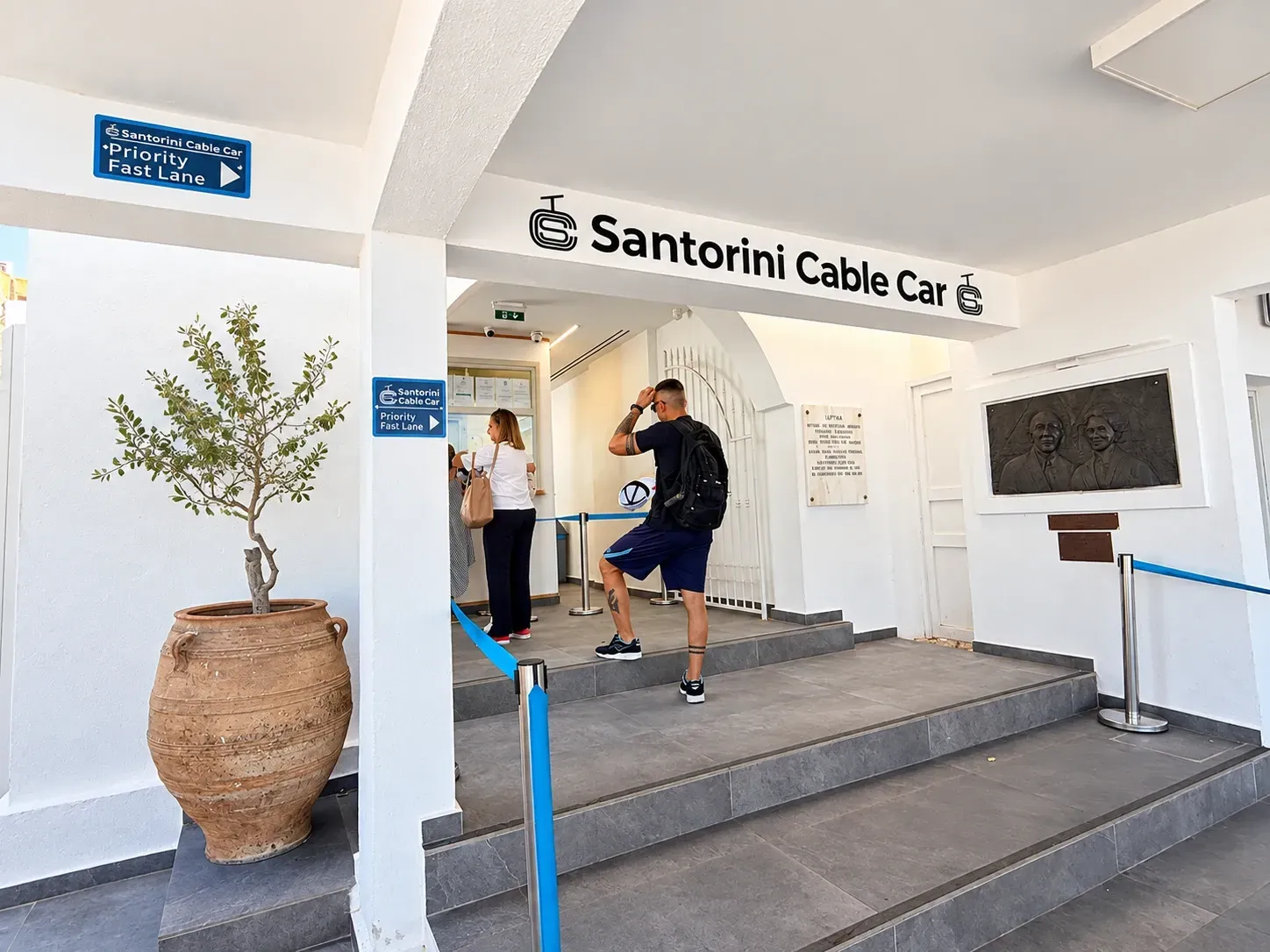
Santorini already had one serious bottleneck: the Old Port, the cable car, and the narrow access up to Fira. The new 30/70 rule has placed even more pressure on that same point, instead of giving the island more practical ways to spread visitors safely and smoothly.
This has created confusion not only for local professionals, but also for the passenger. A cruise guest should know clearly where they will tender, which line they need to follow, where their tour begins, whether they will use the cable car, and how they will return to the ship.
So local agents had to raise their voice to be heard by the authorities asking clear rules, fair access, safe planning, and real choices for everyone before guests arrive in Santorini, not after they are already waiting in line.
Santorini, Cruise Guests, and the Need for Better Island Access
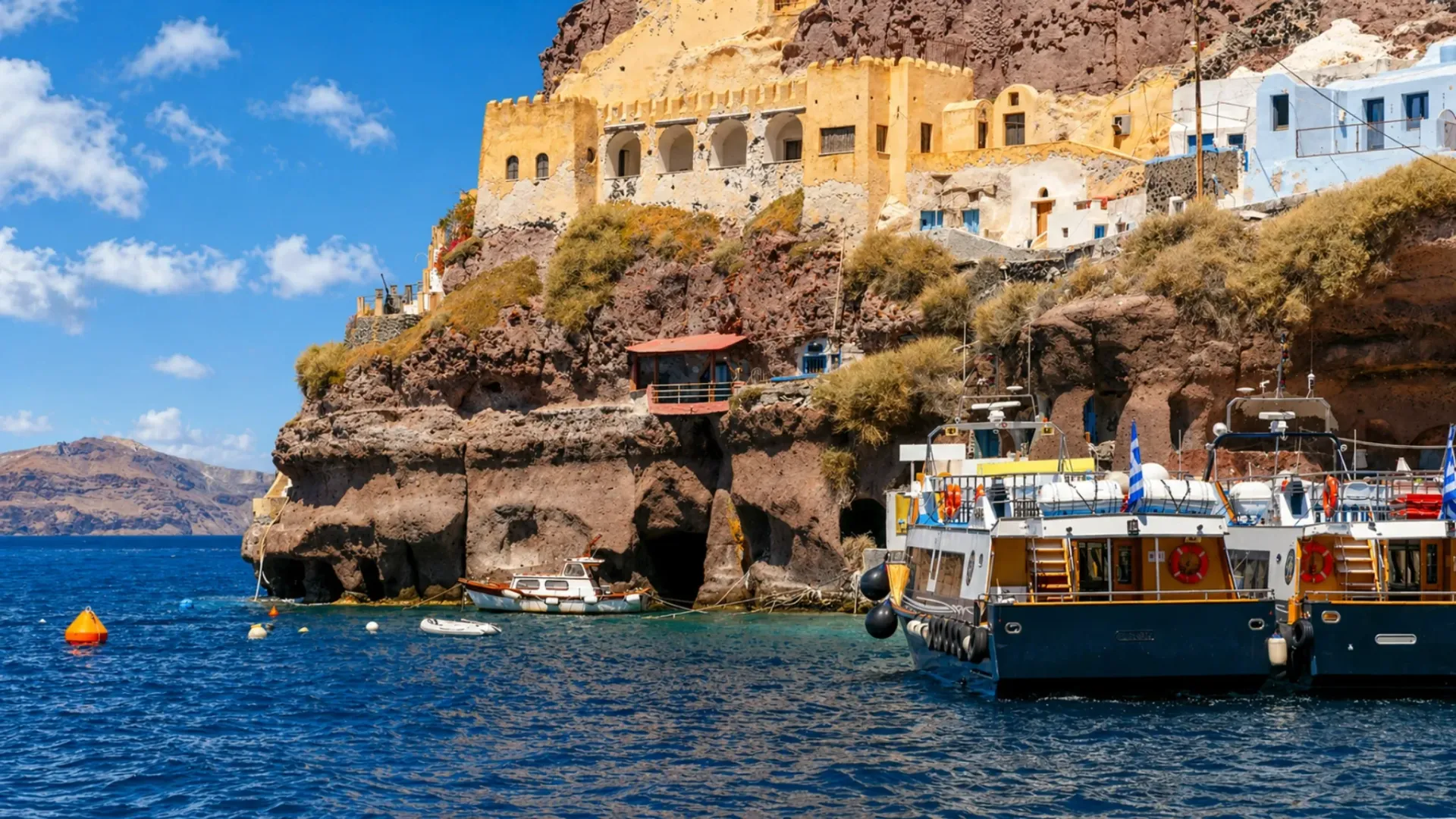
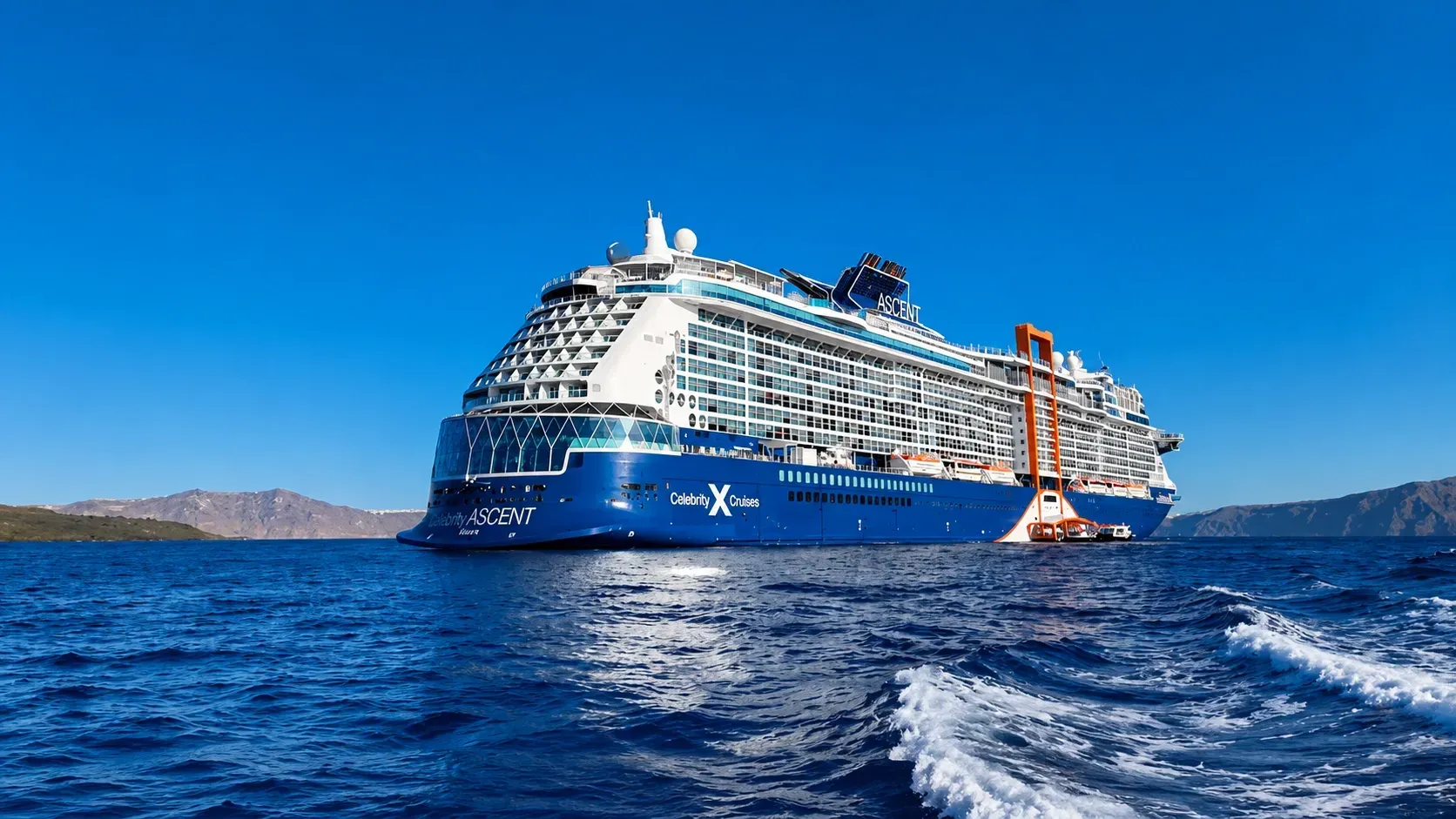
Cruise guests are ferried to the island by tender boats because large cruise ships stay offshore in the caldera. From there, most passengers may be brought to the Old Port below Fira, where the main ways up are the cable car, the steps, or donkey/mule transport.
Santorini cable car is an important part of Santorini’s visitor system, but it has a limited capacity.
What is the 70/30 rule?
The new rule which applied in mid May, means that around 70% of cruise passengers are directed to Ormos Fira, the Old Port below Fira, while only around 30% are directed to Athinios, the road-access port used for buses and wider island excursions.
If a cruise ship carries 3,500 to 4,500 passengers, then 70% means roughly 2,450 to 3,150 people may be sent toward the Old Port. And that is before we count other ships arriving on the same day.
The cable car is part of Santorini’s history and landscape, but it cannot move thousands of people up and down the cliff at the same time. Even if everything works perfectly, there is a limit. A world-famous destination cannot depend on one narrow route for so many people within a few hours.
That creates pressure at exactly the same points: tender boats, the Old Port, the cable car, Fira’s and Oia walking routes, meeting points, and the return queue.
For guests, this is not only a matter of inconvenience. Long waits in summer heat, limited shade, steep walking routes, and unclear meeting places can affect older travelers, families with children, and visitors with mobility concerns. Even guests who only want to visit Fira independently may feel pressure if the return line is long or if they are unsure how much time they need to get back to the ship.
How this affects guests on group cruise tours
Many cruise passengers book a group shore excursion because they expect a smoother start to their day in Santorini. Until recently all organized cruise excursions could begin from Athinios, the road-access port, where guests could board buses directly and start moving around the island.
With the current 30/70 distribution, this is no longer guaranteed.
Even guests who have booked a cruise line excursion may now be directed to the Old Port below Fira and need to use the cable car to come up and walk a mile to reach reach their bus or meeting point.
The 500 people limit at the Old Port also matters
There is also a 500-person limit at the Old Port. This may be necessary for safety and crowd control, but it creates another reality: when the port area reaches its limit, the line does not disappear. It moves somewhere else.
It can mean passengers waiting longer on the ship before tendering. It can mean slower tender rows. It can mean guests losing precious time from a short Santorini visit before they have even stepped properly onto the island.
A limit can protect safety, but only if the whole system is designed around it: tender timing, shade, water, clear signs, meeting points, emergency access and honest communication.
Safety questions after the 2025 earthquakes
Safety must come first. During the 2025 earthquake period, some coastal and port areas were treated with caution, and certain operations were avoided or restricted because of safety concerns.
So if the Old Port is now becoming the main hub for most cruise passengers, we believe the public deserves clear answers:
How is the area managed today?
How are crowds controlled?
What happens in an emergency?
Where do guests wait safely?
How do older visitors, families and people with mobility concerns move comfortably?
These are not political questions. They are practical questions.
Athinios Is a Ferry Port, But It Is Also the Only Road-Access Port
One of the arguments used for limiting cruise passenger access is that Athinios is mainly a ferry port. This is true. But Athinios/New Port is also the only port in Santorini with direct vehicle access. If cruise guests, cruise lines, and local operators need a road-access point, there is no second equivalent port on the island.
So the real question is how it can be used carefully, with safe time slots, away from the busiest ferry hours, and with proper coordination, so that ferry traffic, cruise guests, local transport, and port operations can all work without unnecessary pressure.
Using Athinios should not mean creating chaos at the ferry port. But refusing to use it properly places even more pressure on the Old Port, the cable car, alternative sea routes, and the narrow roads leading in and out of Fira and Oia.
Welcoming Guests with Better Planning, Safer Access, and Real Options
Real choice for everyone
Santorini is a world-famous destination, and a destination that needs logistics working smoothly for everyone: cruise guests, cruise lines, local travel agencies, private tour operators, guides, drivers, public services, local businesses, and the island itself.
When we speak about democracy, we mean something very simple: choice for everybody.
Cruise ships should be able to offer various shore excursion options to more guests, not only to a small percentage of passengers. Different type of experiences and more island-wide activities could also help Santorini breathe better. When most visitors are concentrated only in Fira and Oia, the pressure becomes heavy for guests and locals alike.
With the 70/30 rule, we make it harder for passengers to experience other parts of Santorini: traditional villages, wineries, viewpoints, local food stops, cultural sites, beaches, and quieter corners of the island that also deserve to be part of the cruise visitor experience. With more coordinated choices, cruise lines, passengers, local businesses, and Santorini itself can all benefit.
Independent cruise guests should also have clear options. Some may want to tender to the Old Port because they only want to visit Fira on their own. That is completely valid. Others may have booked a private tour, a car rental, a taxi, or may simply want to reach the road-access port and continue by local bus or vehicle. For these guests, Athinios can be an important option, because it is the only port with direct vehicle access.
At the same time, when the official road-access port is limited, more boats are used to move people through alternative routes and alternative ports, such as Ammoudi, or in between Old Port and New Port. More buses and vehicles are needed to go up and down the island again and again. This creates extra pressure on our seas, extra traffic on our roads, and unnecessary movement for a small island that already carries a heavy tourism load.
It also opens space for a parallel economy around the Old Port, where water taxis or other alternative services can take advantage of the situation, raise prices, or offer overpriced solutions simply because passengers are left with fewer practical ways to move.
Local travel agencies and cruise excursion operators also need proper, designated meeting points. Guests should not have to walk long distances under the summer heat just to find their bus or guide. Fira and Oia need clear pickup and drop-off areas, better signs, and realistic walking routes, especially for older visitors, families, and people with mobility concerns.
Private tour operators and guides also need a fair and clear system. Today, many of us feel anxious even suggesting the cable car to guests, because we know the reviews, the long lines, and the stress people may face. This is not healthy for anyone. The cable car should remain a normal, respected, and well-organized access option, not something guests fear and operators try to avoid at all costs. A visitor should be able to use the cable car in a calm and predictable way, as it used to work the last few years.
Time for a Real Cruise Plan for Santorini
Most importantly, Santorini should not push everyone into the same two places at the same time. When almost all cruise visitors are driven into Fira and Oia, these areas cannot breathe. Guests feel rushed, locals feel pressure, and the island experience becomes smaller than it should be.
What we need now is not blame. We need all responsible parties to sit at the same table: the municipality, port authorities, cruise lines, local travel agencies, tour operators, guides, drivers, transport teams, public services, and local business representatives.
Together, they need to create a clear and practical cruise passenger plan for Santorini. A plan with safe time slots, dedicated tendering points where possible, designated meeting areas, proper pickup and drop-off locations in Fira and Oia, clear signs, realistic walking routes, and honest information for guests before they arrive.
With better planning, Santorini can offer something fairer: cruise lines with more flexibility, guests with real choices, local operators with clear access, and villages across the island with a chance to share in the benefits of tourism.
This is what we ask. Not closed doors. Not fewer dreams. Just the right doors, at the right time, in the safest and fairest way.
Cruise guests deserve to know how they will get ashore, how they will move around, how they will return, and what their realistic options are. Cruise lines deserve reliable local systems. Local businesses deserve fair access to visitors. And Santorini deserves a visitor model that protects the island while keeping its doors open.
From Our Side
Santoriginal Tours is a private tour operator, and yes, we offer private tours. But this is not only about us. We work separately from the cruise ships, but we care about the whole visitor experience, from the moment a guest arrives in Santorini until the moment they return safely to their ship. We love this island more than we love any single business interest.
We want guests to arrive with excitement, not anxiety. We want cruise lines to feel confident including Santorini in their itineraries. We want local drivers, guides, boat crews, travel agencies, public services, and small businesses to work in a system that is organized, fair, and respectful. And we want local residents to feel that tourism is being managed with care.
Santorini does not need more blame. It needs cooperation, planning, honesty, and respect for the real conditions on the island.
We hope the current disruption becomes a reason for constructive dialogue, not division. With thoughtful planning, safe port logistics, practical access points, better meeting areas, more cultural routes, and clear information for passengers, Santorini can offer something better for everyone: a smoother arrival, a more relaxed visit, and a beautiful memory that feels close to the dream guests had before they came.
Santorini is extraordinary. The way we welcome people should be too.
Helpful guides for planning your Santorini cruise day
If you are visiting Santorini by cruise ship, these guides can help you understand the cable car, shore excursion options, cruise-line logistics, and why the right tour choice can change the whole feeling of your day.
- Start with Santorini cruise day basics: See our Santorini cruise port guide for the cruise schedule, tendering, busy-day planning, cable car notes, and the main things to know before your Santorini port day.
- Old Port & cable car reality: Read our Santorini cable car guide for the Old Port, cable car lines, water shuttle options, and what cruise passengers should know before coming ashore.
- The “skip-the-line” promises: Learn what skip-the-line tours in Santorini really mean, and how to look beyond marketing words when choosing an excursion.
- For Celebrity Cruises guests: See our Celebrity Cruises Santorini guide for a simple look at tendering, cable car timing, and shore-day planning.
- Why your excursion choice matters: Read how a private tour in Santorini can make the difference between losing time in crowds and actually enjoying your day.
Recent Posts